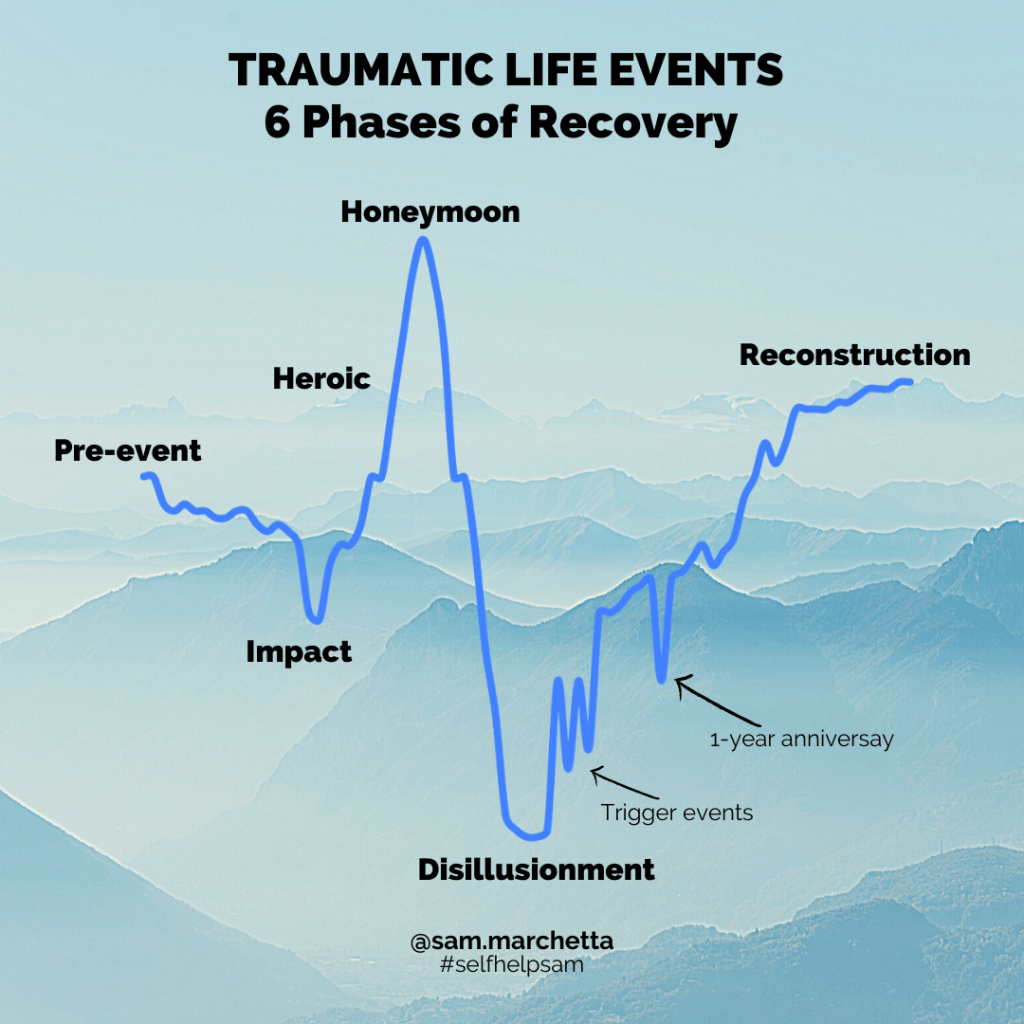
6 Phases of Recovery from Traumatic Life Events
We all experience traumatic life events, such as the current COVID pandemic that we are all collectively going through now. Other examples include:
- Death of family member, lover, friend, or pet.
- Divorce or relationship break-up
- Physical pain or injury (e.g. severe car accident)
- Serious illness
- Natural disasters
- Terrorism
- Moving to a new location
The experience of such an event results in a major disruption to one’s life and typically kick starts a transitionary period that can be categorised by six key phases of recovery.*
1. PRE-EVENT phase occurs when we have prior warning or an indication that a traumatic event is going to occur. It typically includes feelings of anxiety, stress and fear. There is a feeling of uncertainty and a loss of control related to what might transpire. Behaviors during this time include activities aimed at reducing anxiety, such as the panic buying we have seen during this COVID era.
2. IMPACT phase is a typically an intense short phase. It can result in an overload of emotions with the potential for immense shock, disbelief and confusion. The intensity of this phase often depends on the duration of the pre-event phase, and whether the event was completely unexpected or expected. For example, when the death of a loved one is unexpected the impact phase is likely to be significantly more intense.
3. HEROIC phase is a highly active phase, often driven by adrenaline, whereby we may try a multitude of activities focused on getting things done. Depending on the situation, it could involve gathering of resources, making arrangements, and connecting with people to share what is happening and/or provide support to others impacted from the situation.
4. HONEYMOON phase is characterised by a huge increase in positive emotion and great optimism. There is a sense that you will get through this, and all is going to be okay. We may even become inspired to try new things. Think of the initial stages of the COVID pandemic when many of us were inspired to get into baking, complete jigsaw puzzles, or join online Zoom parties. Typically during this phase you have a lot of support from others in your network. For example, when we lose a loved one we typically have an outpouring of support from others, and have a strong sense of community. However, eventually this tapers off and reality starts to set in.
5. DISILLUSIONMENT phase is in many ways a complete retraction of the honeymoon phase. During this phase the reality of the situation you are facing starts to set in. The reality of what is left, and what has been lost becomes very real. It is during this phase that much of the work and potential for personal growth takes place. It is also the phase where we face the greatest risk to our recovery. It can be marred with negativity, exhaustion, and maladaptive coping mechanisms such as substance abuse. This phase is also susceptible to trigger events, such as anniversaries, special occasions and birthdays. During this phase it is critical that when needed, one reaches out and seeks support.
6. RECONSTRUCTION phase is typically distinguished by greater acceptance of what has occurred. The phase is filled with a sense that things are going to get better and the “new normal” or “new beginning’ is within sight. There’s a feeling that you will be okay, and that you are going to recover. This phase typically accelerates after the one year anniversary of the event.
Link to global support services.
*Six phases of recovery adapted from Zunin & Myers as cited in the ‘Training Manual for Mental Health and Human Service Workers in Major Disasters’ – DeWolfe, D. J., 2000.
 the psych view by SAM MARCHETTA